


Loading profile. Please wait . . .
Caupolicana electa (Cresson, 1878)
Southeastern Fork-tongue Bee


Federal Protection: No US federal protection
State Protection: No Georgia state protection
Global Rank: G2
State Rank: S1S2
Element Locations Tracked in Biotics: Yes
SWAP 2015 Species of Greatest Conservation Need (SGCN): Yes
SWAP 2025 Species of Greatest Conservation Need (SGCN): Yes
2025 SGCN Priority Tier: Highest Conservation Concern
Element Occurrences (EOs) in Georgia: 17
Habitat Summary for element in Georgia: sandhills
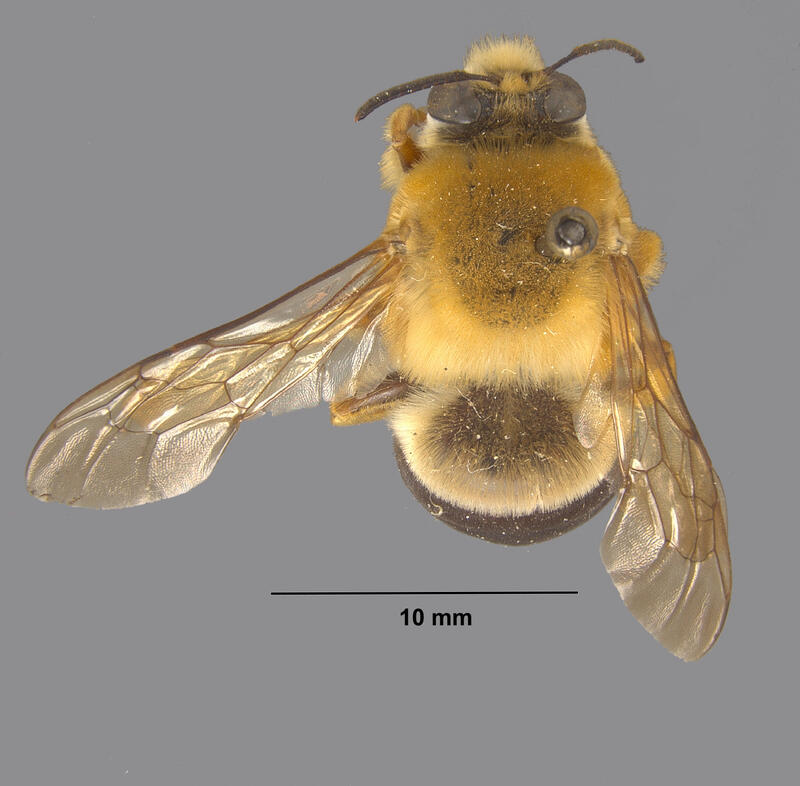
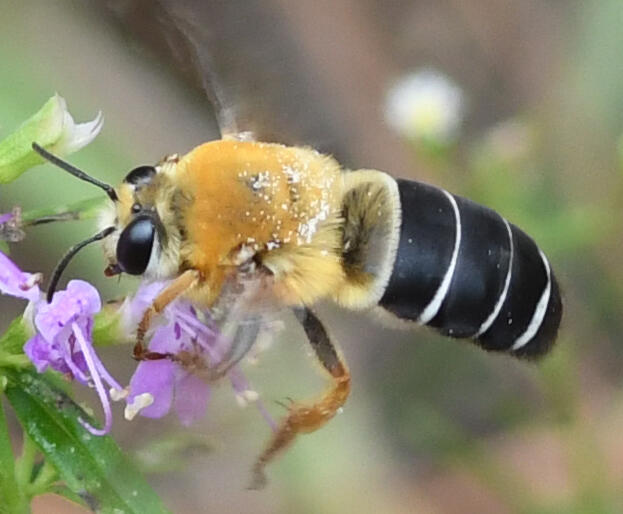
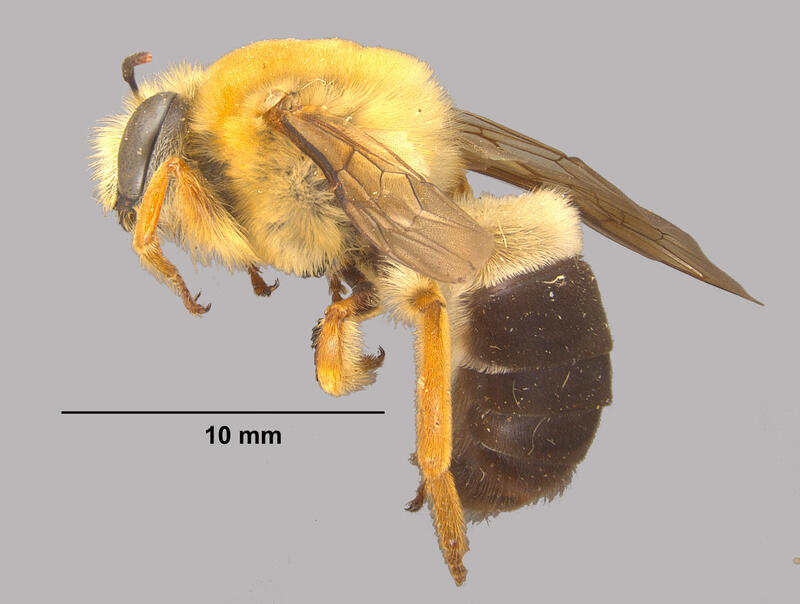
The plasterer bee is a large, solitary species, averaging at a length of 20 mm. Head, thorax, legs, and the basal abdominal segment are all obscured by a dense pubescence which may be described as ochraceous in color. Further abdominal segments are black and possess, shorter black setae. Pygidial plates are large and very well-developed in females. While the plate is also evident in males, it is less distinctive.
A related species, Caupolicana floridana, is present in the sandhill scrub habitats of peninsular Florida and does not occur in Georgia. This bee closely resembles species in the genus Colletes, which is in the same family, Colletidae. The most notable difference between the two genera, is the presence of a distinctive pygidial plate in Caupolicana.
Comprised of open, fire-maintained clay ridge savannas and sandhill scrub habitats.
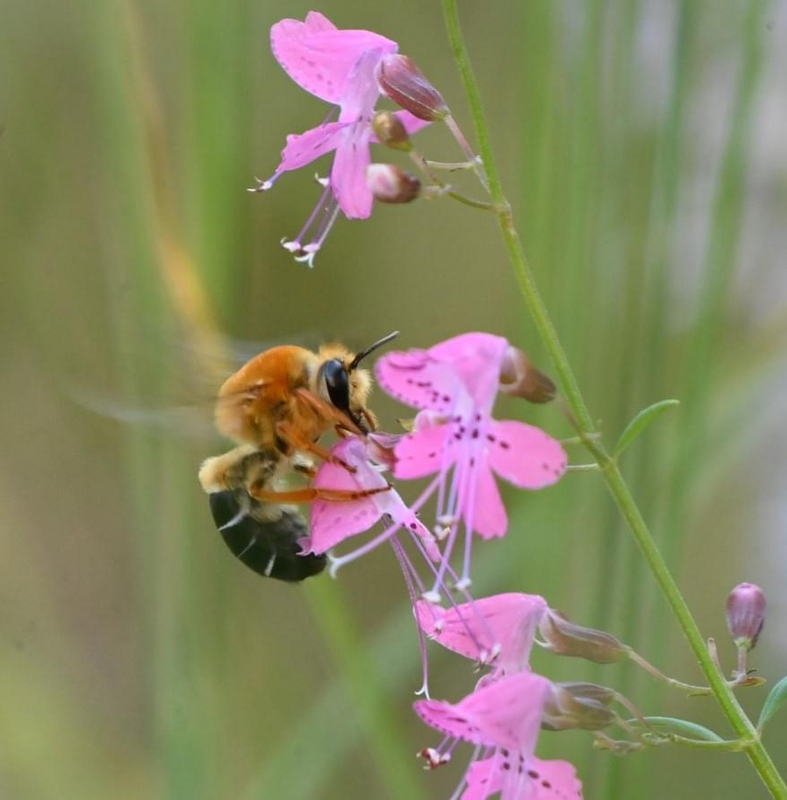
The plasterer bee seems to be limited in its number of floral hosts. Recorded floral hosts include Aureolaria sp., Chamaecrista sp., and Trichostema dichotemum. It is likely that there are other floral hosts and interactions have simply not been observed.
Like other Hymenoptera, the plasterer bee undergoes a complete metamorphosis. Little is known about the reproductive biology of this species. Research is ongoing. Florida researchers have observed that the nests of this species can reach depths of three feet.
It would work best to actively search for this bee among its preferred floral hosts: Aureolaria sp., Chamaecrista sp. and T. dichotemum. It is also likely that blue and yellow bee bowls or Malaise traps would produce specimens, if appropriately placed and floral hosts are present on-site.
This bee occurs on clay ridges and sandhills throughout the southern Atlantic and Eastern Gulf Coastal Plains. It ranges south from the Carolinas to the Florida panhandle and may occur as far west as southeastern Mississippi.
Multiple factors threaten the plasterer bee. While the biology of this species is very poorly known, what is understood is that larger, intact tracts of well-managed habitat seem to be necessary for sustaining populations. Land development and conversion to agriculture has completely removed much of the habitat and fragmented what remains. The historical habitat that does remain does not often see the fire needed to maintain an open scrub with abundant floral hosts, capable of supporting diverse insect fauna.
| Threat 1 | Threat 2 | Threat 3 | |
|---|---|---|---|
| General Threat | Natural system modifications | Transportation & service corridors | Residential & commercial development |
| Specific Threat | Other ecosystem modifications | None | Work & other activities |
This species is Tracked. Surveys in 2022 were successful in finding additional populations of this species in multiple counties of Georgia.
C. electa is not known to occur in cultivated landscapes. Very little is known about the biology of this species. Conservation of the required habitat and the native plants that grow there is essential to the conservation of this species. Reintroduction of fire is necessary to maintain open scrub and the plants that support C. electa. It is important to avoid use of pesticides in habitats where this species is known or suspected to occur.
Michell, Theodore B. Bees of the Eastern United States. Vol. 1. North Carolina Agricultural Experiment Station, 1960.
Michener, Charles D., and Mark Deyrup. “Caupolicana from Florida (Hymenoptera: Colletidae).” Journal of the Kansas Entomological Society 77, no. 4 (2004): 774–82. https://doi.org/10.2317/e2.1
Brady S. Dunaway
12/2/2019
Updated 4/24/2023