


Loading profile. Please wait . . .
Litsea aestivalis (L.) Fern.
Pondspice


Federal Protection: No US federal protection
State Protection: Rare
Global Rank: G3
State Rank: S2
Element Locations Tracked in Biotics: Yes
SWAP 2015 Species of Greatest Conservation Need (SGCN): Yes
SWAP 2025 Species of Greatest Conservation Need (SGCN): Yes
2025 SGCN Priority Tier: High Conservation Concern
Element Occurrences (EOs) in Georgia: 82
Habitat Summary for element in Georgia: Cypress ponds; swamp margins
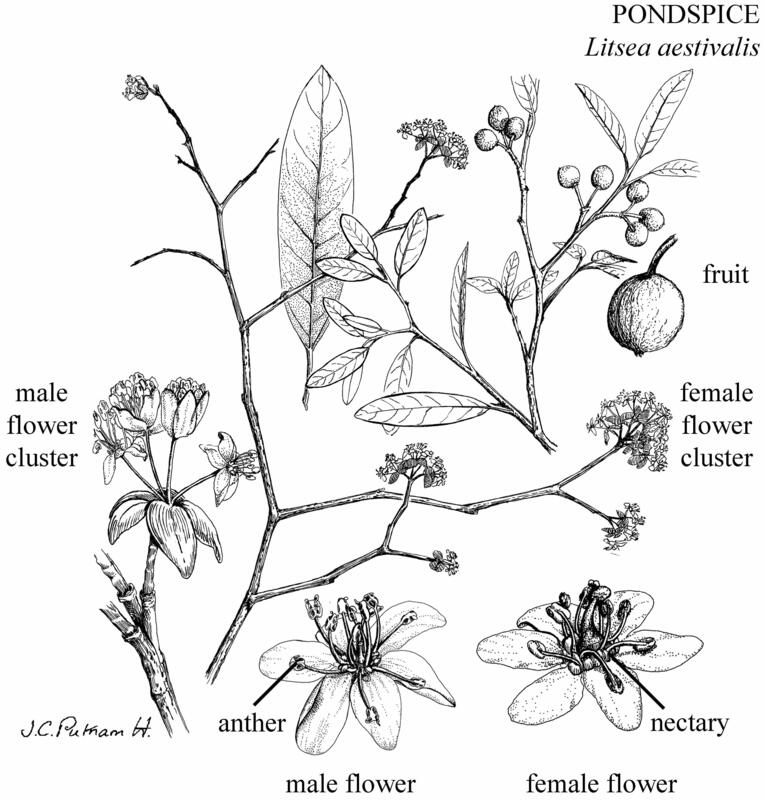
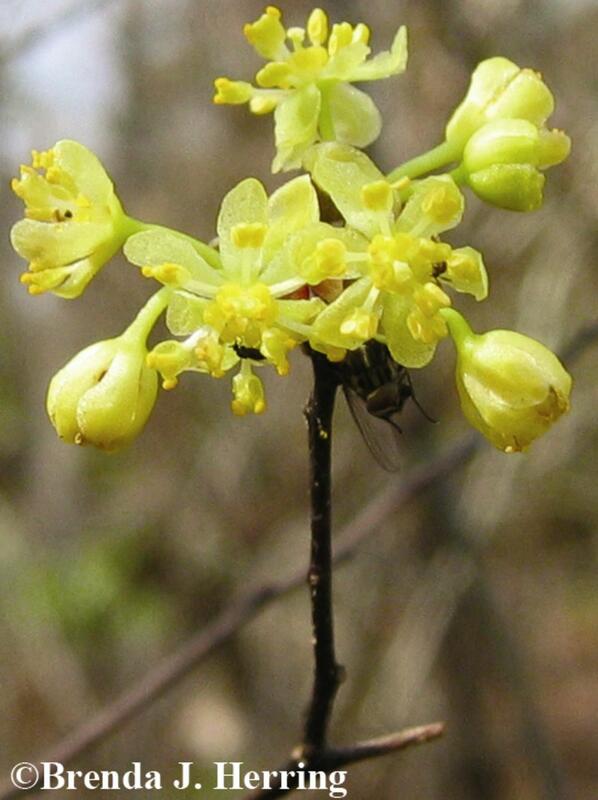
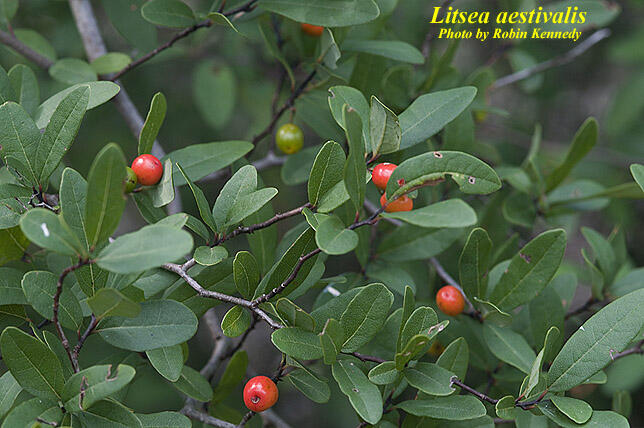
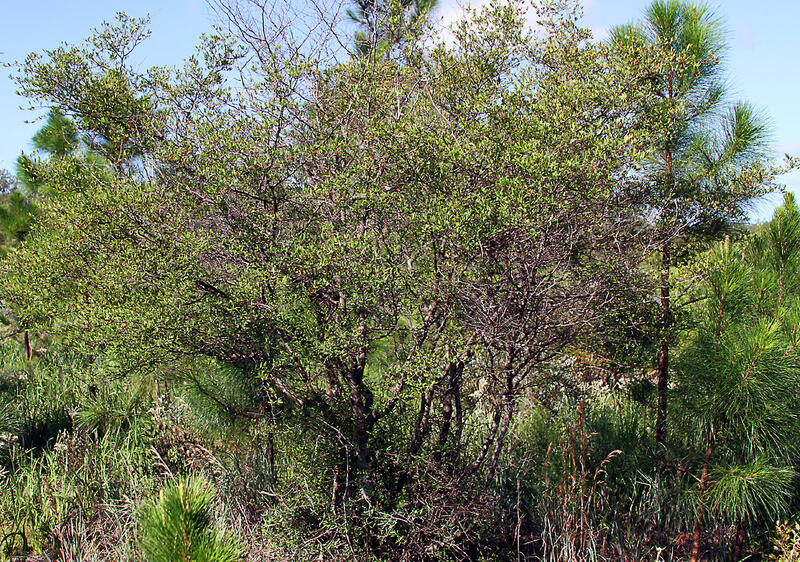
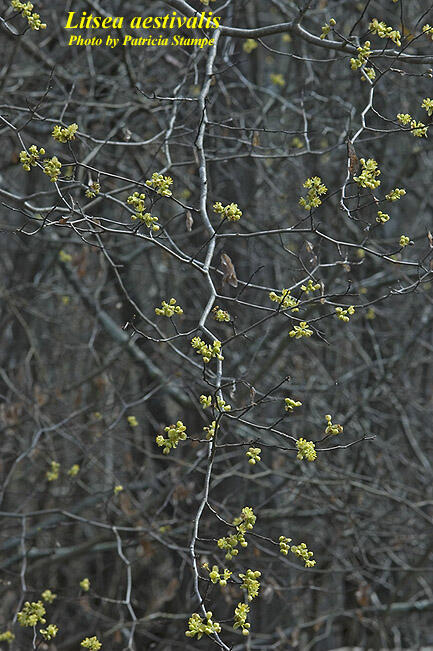
A shrub or small tree up to 10 feet (3 meters) tall. Twigs are zigzag and odorless when crushed. The leaves are 0.6 - 1.6 inches (1.5 - 4 cm) long, deciduous, simple, alternate, somewhat leathery, smooth, oblong to lance-shaped; their margins are entire and slightly thickened. Flowers are usually held in clusters at the tips of the twigs, each flower about 0.25 inch (0.6 cm) wide, opening before the leaves appear, with 6 pale yellow sepals (there are no petals). Female and male flowers are produced on separate plants; female flowers have 1 pistil, 9 non-functional stamens (staminodes), and a ring of nectar-producing glands; male flowers have 9 stamens, each with 4 openings on the anther. Fruits are up to 0.4 inch (0.4 - 1 cm) long, fleshy, red, round.
Spicebush (Lindera benzoin) is a patch-forming shrub that also flowers before leafing out; its flowers resemble those of Pond Spice but its twigs have a spicy smell and are not zigzag.
Myrtle-leaf Holly (Ilex myrtifolia) grows in habitats similar to those of Pond Spice, and its leaves are similar in size and shape but are bristle-tipped; its flowers are white and its twigs are not zigzag.
The state- and federally listed Pondberry (Lindera melissifolia) also occurs on the edges of sandhill ponds and limesinks in the Coastal Plain. For more information, see: https://www.georgiabiodiversity.org/portal/profile?group=plants&es_id=16447
Bog Spicebush (Lindera subcoriacea) occurs in central Georgia, in or near the Fall Line Sandhills, in shrubby seepage wetlands and in streamside thickets, usually with sphagnum moss. For more information, see: https://www.georgiabiodiversity.org/portal/profile?group=plants&es_id=19894
Edges of swamps, cypress ponds, sandhill depression ponds, and Carolina bays, sometimes forming thickets around pond margins.
Pond Spice reproduces sexually by seed as well as vegetatively by suckering from underground stems (rhizomes), sometimes forming thickets. It is dioecious – female and male flowers are produced on separate plants. The flowers are probably pollinated by flies and small bees that are attracted to the nectar produced in glands at the base of the female flowers. The seeds are dispersed by birds and other animals who eat the fruit. Pond Spice is a larval host plant for Palamedes Swallowtail and Spicebush Swallowtail butterflies.
Pond Spice is currently at risk of infection by Laurel Wilt Disease, a fungal (Raffaelea sp.) infection that kills trees and shrubs in the Laurel family. The fungus is carried by an exotic insect, the Red Bay Ambrosia Beetle (Xyleborus glabratus), and blocks water-conducting cells of infected plants, resulting in wilted leaves and, quickly and ultimately, death. Laurel Wilt has spread quickly along the southeastern coast and caused extensive mortality among Red Bay (Persea spp.). Laurel Wilt is likely to spread inland, infecting and killing rare species in the Laurel family such as Pond Spice, Pondberry (Lindera melissifolia), and Bog Spicebush (Lindera subcoriacea), as well as common species such as Sassafras (Sassafras albidum) and Spicebush (Lindera benzoin).
Surveys are best conducted during flowering (early March–April) and fruiting (May–June), but the zigzag stems and small, leathery leaves are distinctive throughout the growing season.
Coastal Plain of Georgia, Florida, South Carolina, North Carolina, Virginia, and Maryland. It is imperiled throughout its range.
Ditching, draining, and filling wetlands. Lowering of the water table by excessive pumping from the Floridan Aquifer. Fire suppression and construction of firebreaks in wetland transition zones. Digging by feral hogs. Laurel Wilt Disease. Changes in hydrology due to altered temperature and rainfall patterns related to climate change.
| Threat 1 | Threat 2 | Threat 3 | |
|---|---|---|---|
| General Threat | Natural system modifications | Invasive & other problematic species, genes & diseases | Pollution |
| Specific Threat | None | None | None |
Pond Spice is ranked S2 by the Georgia Department of Natural Resources, indicating that it is imperiled in Georgia. It is listed as Rare by the State of Georgia. More than 76 populations have been documented in Georgia since 1906 and more than 40 of these have been confirmed in the last 20 years; however, only 12 of these populations occur on conservation lands.
Protect isolated wetlands from ditching, draining, and filling. Avoid activities that lower the water table. Avoid placing roads and firebreaks in transition zones between swamps or ponds and uplands. Allow prescribed fires in uplands to burn into wetlands (Pond Spice re-sprouts vigorously after a fire). Eradicate feral hogs. Research treatment and prevention of Laurel Wilt Disease. Address hydrological issues related to climate change.
Chafin, L.G. 2007. Field guide to the rare plants of Georgia. State Botanical Garden of Georgia and University of Georgia Press, Athens.
Chafin, L.G. 2000. Field guide to the rare plants of Florida. Florida Natural Areas Inventory, Tallahassee.
Foote, L.E. and S.B. Jones, Jr. 1989. Native shrubs and woody vines of the southeast. Timber Press, Portland, Oregon.
GADNR. 2020. Element occurrence records for Litsea aestivalis. Georgia Department of Natural Resources, Wildlife Resources Division, Social Circle, Georgia.
Godfrey, R.K. and J.W. Wooten. 1981. Aquatic and wetland plants of southeastern United States, Vol. 2, dicotyledons. University of Georgia Press, Athens.
Godfrey, R.K. 1988. Trees, shrubs, and woody vines of northern Florida and adjacent Georgia and Alabama. University of Georgia Press, Athens.
Gramling, J.M. 2010. Potential effects of laurel wilt on the flora of North America. Southeastern Naturalist 9(4): 827-836.
Kral, R. 1983. A report on some rare, threatened, or endangered forest-related vascular plants of the South. Technical Publication R8-TP2. United States Forest Service, Atlanta.
Lance, R. 2004. Woody plants of the southeastern United States: a winter guide. University of Georgia Press, Athens.
NatureServe. 2019. Litsea aestivalis comprehensive report. NatureServe Explorer. Arlington, Virginia. http://explorer.natureserve.org/servlet/NatureServe?searchName= Litsea+aestivalis
Patrick, T.S., J.R. Allison, and G.A. Krakow. 1995. Protected plants of Georgia. Georgia Department of Natural Resources, Natural Heritage Program, Social Circle.
Weakley, A.S. 2015. Flora of the southern and mid-Atlantic States. University of North Carolina Herbarium, University of North Carolina, Chapel Hill. http://www.herbarium.unc.edu/flora.htm
Werff, van der, H. 1997. Litsea aestivalis species account. Flora of North America. Vol. 3. Oxford University Press, New York. http://www.efloras.org/florataxon.aspx?flora_id=1&taxon_id=233500753
Linda G. Chafin
L. Chafin, May 2007: original account
K. Owers, Feb. 2010: added pictures
L. Chafin, Mar. 2020: updated original account