



Loading profile. Please wait . . .
Melanoplus stegocercus Rehn and Hebard, 1916
Stegocercus Short-wing Grasshopper


Federal Protection: No US federal protection
State Protection: No Georgia state protection
Global Rank: G1G3
State Rank: S2
Element Locations Tracked in Biotics: Yes
SWAP 2015 Species of Greatest Conservation Need (SGCN): Yes
SWAP 2025 Species of Greatest Conservation Need (SGCN): Yes
2025 SGCN Priority Tier: Moderate Conservation Concern
Element Occurrences (EOs) in Georgia: 9
Habitat Summary for element in Georgia: Georgia endemic; restricted to a small range; Turkey Oak sandhills
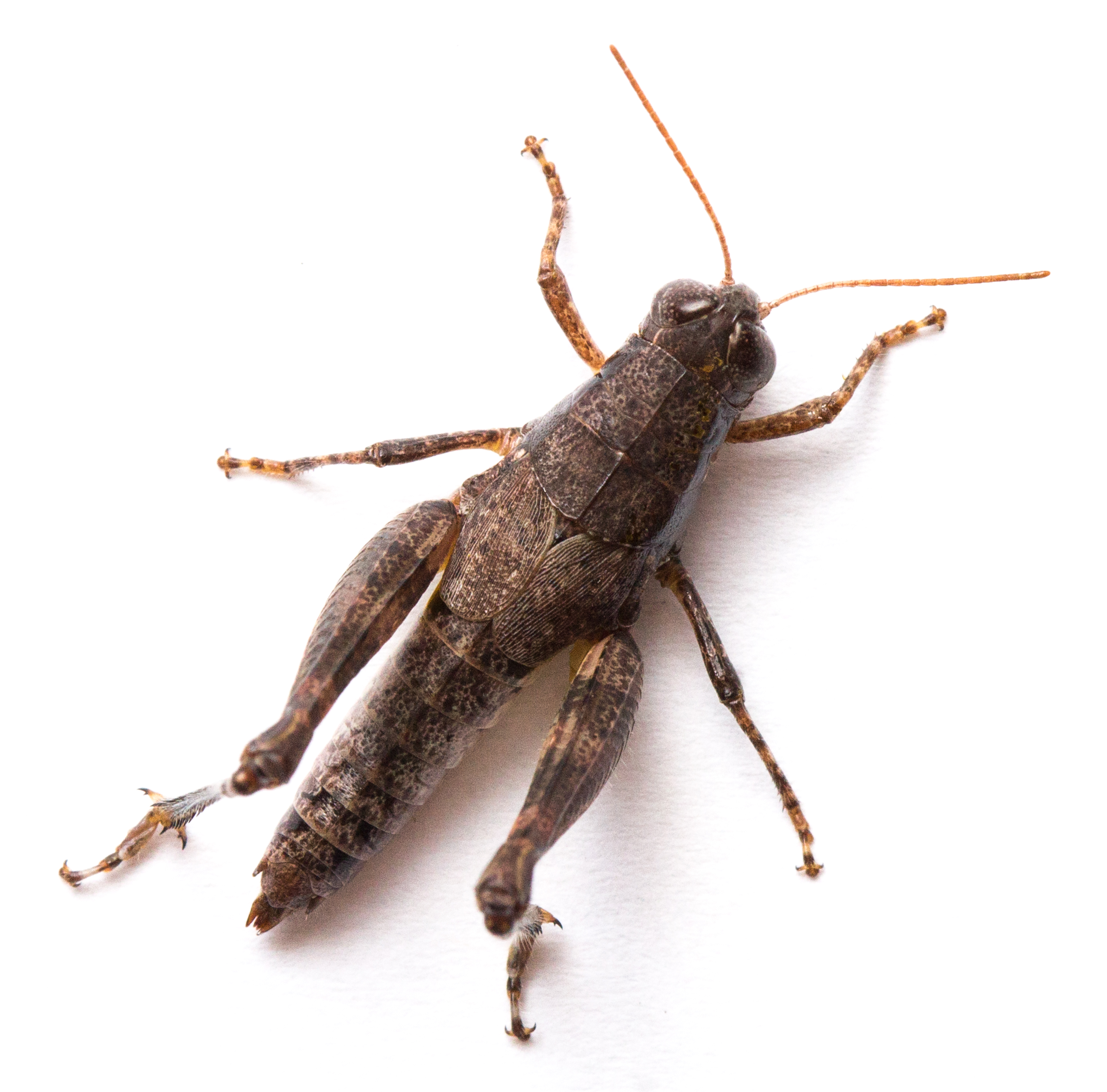
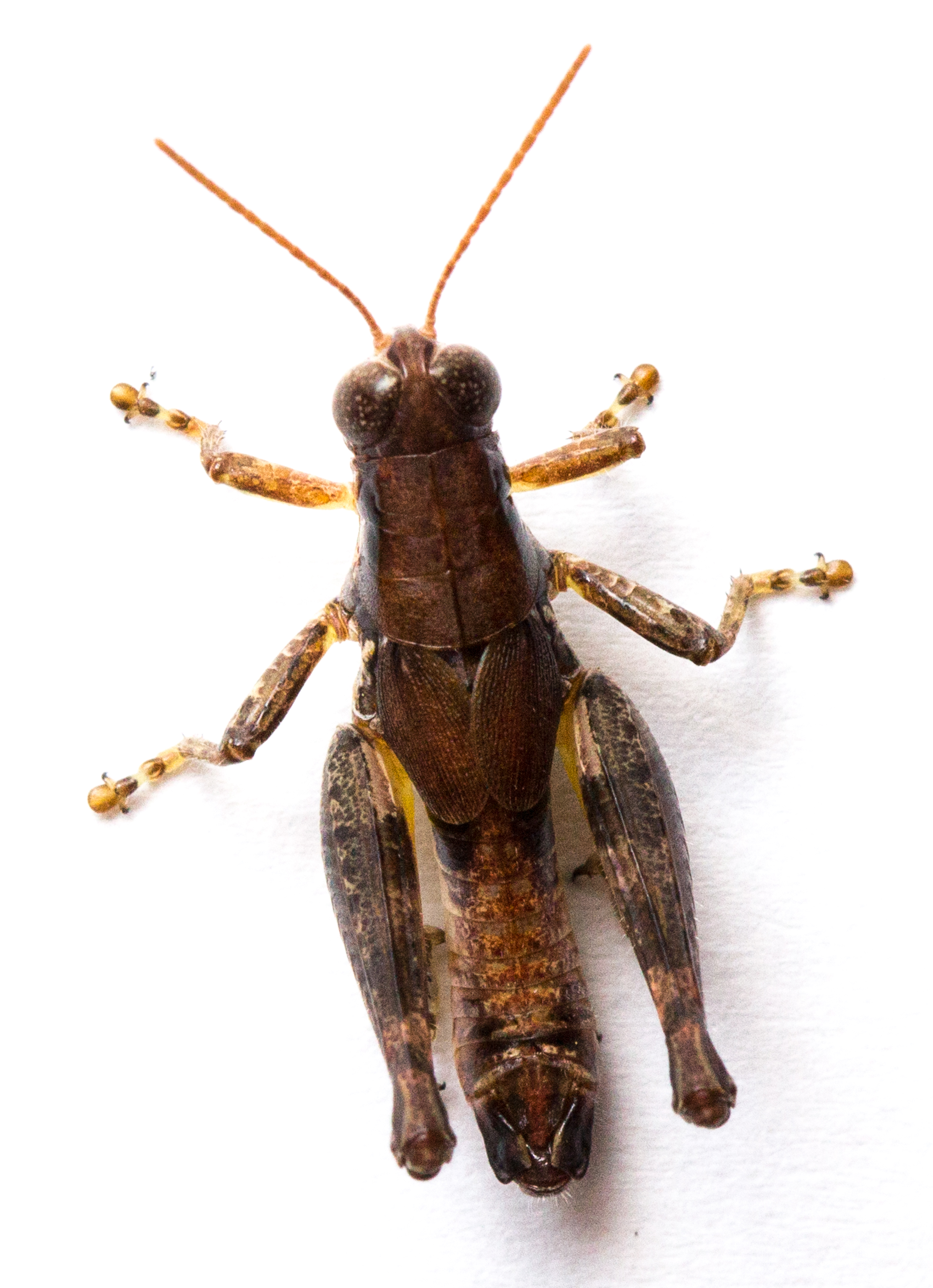
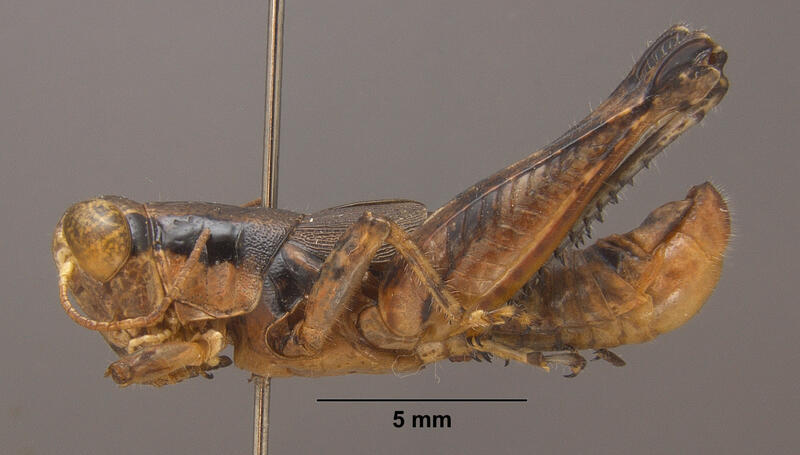
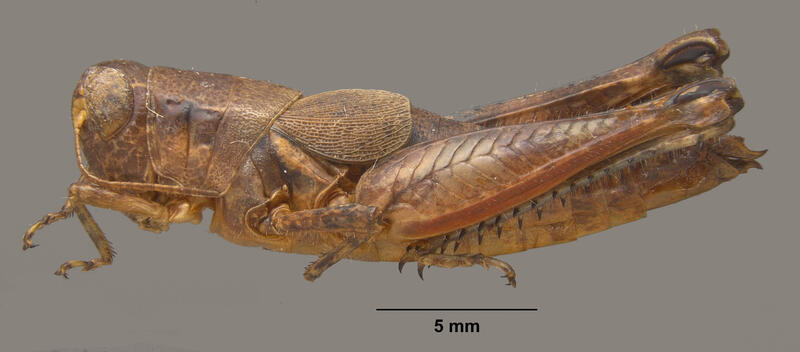
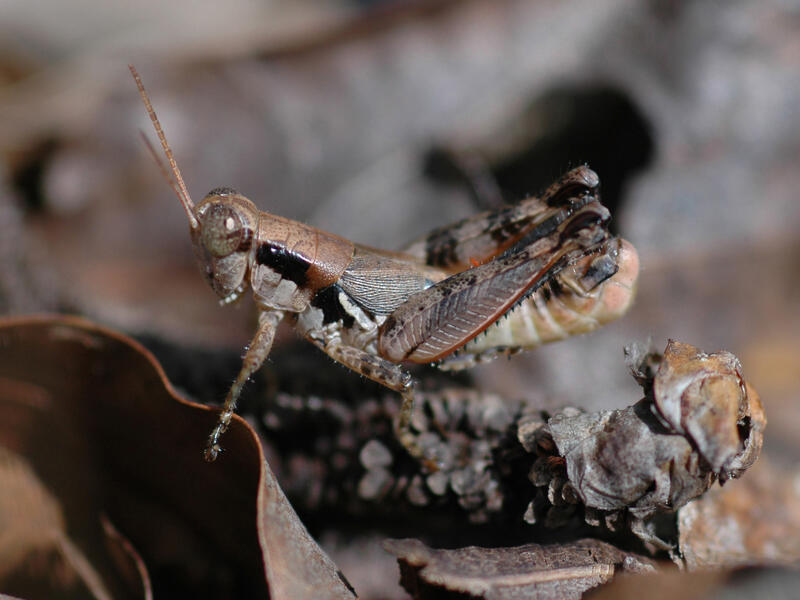
A small grasshopper (10-27 mm in length). Brownish in color with black stripe extending laterally from behind the eye down the thorax. Hind tibia are blueish-gray. The male cerci are subquadrate (almost rectangular) plate-like structures. This species has short wings and is incapable of flight, but is a very strong jumper.
Most similar to Melanoplus tumidicercus, but differs in the shape of the male cerci and the internal male genitalia. Other related species tend to differ in habitat and range.
Can be found in high quality riverine dune or sandhill communites of east Georgia. Inhabits low-growing limbs and brush, especially of oak (Quercus sp.).
Probably a generalist feeder on herbaceous plants and tender oak leaves. Often found in clumps of Gopher apple (Licania michauxii Prance).
Like all Orthopterans, the Melanoplus stegocercus undergoes an incomplete metamorphosis. Adults may be found throughout the growing season.
Walk through suitable habitat. Catch specimens with a net to confirm ID.
Endemic to the North American Coastal Plain of eastern Georgia.
The primary threats to this species come from development and fragmentation of its habitat, combined with a naturally narrow range. Suppression of fire has also allowed woody species and exotic invasive species to encroach on the open habitat needed by this species.
| Threat 1 | Threat 2 | Threat 3 | |
|---|---|---|---|
| General Threat | Natural system modifications | Residential & commercial development | Invasive & other problematic species, genes & diseases |
| Specific Threat | Fire & fire suppression | Housing & urban areas | Invasive non-native/alien species/diseases |
A small number of extant populantions are known. The populations are found on mix of private and public lands.
Conservation of this species is best conducted by preservation and management of the remaining habitats where it occurs. Reintroduction of fire into the landscape will help maintain and restore suitable habitat.
Hill, J.G. 2009. The grasshopper (Orthoptera: Acrididae) fauna of sand dunes along the Little Ohoopee River, Emanuel County, Georgia, USA. Journal of Orthoptera Research. 18: 29-35.
Hubble, T.H. 1932. A revision of the Puer Group of the North American genus Melanoplus with remarks on the taxonomic value of the concealed male genitalia in the Cyrtacanthacrininae. (Orthoptera: Acrididae) Miscellaneous Publications of the University of Michigan Museum of Zoology No. 23. 64 pp.
JoVonn G. Hill and Brady S. Dunaway
12/2/2019