



Loading profile. Please wait . . .
Borodinia missouriensis (Greene) P.J. Alexander & Windham
Missouri Rockcress


Federal Protection: No US federal protection
State Protection: No Georgia state protection
Global Rank: G5
State Rank: S2
Element Locations Tracked in Biotics: Yes
SWAP 2015 Species of Greatest Conservation Need (SGCN): Yes
SWAP 2025 Species of Greatest Conservation Need (SGCN): No
2025 SGCN Priority Tier:
Element Occurrences (EOs) in Georgia: 6
Habitat Summary for element in Georgia: Granite and amphibolite outcrops
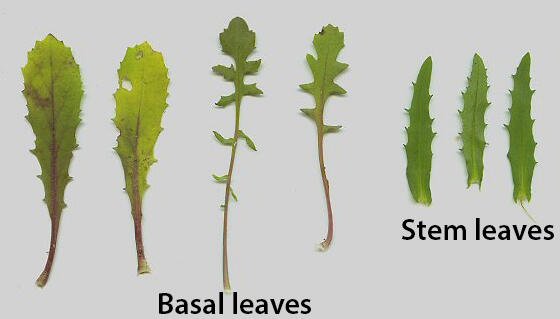
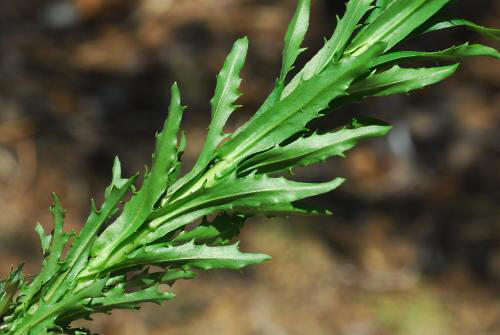
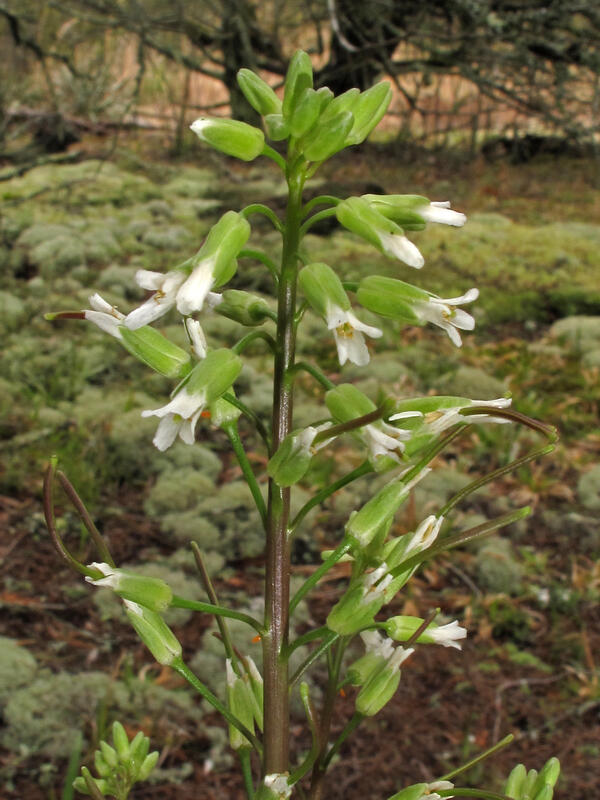
Biennial herb with a typically single, green or red-tinged stem 8 - 30 inches (20-75 cm) tall, smooth or slightly hairy near the base, arising from a basal leaf rosette and a taproot. Basal leaves are 0.8 - 3.5 inches (2 - 9 cm) long and 0.2 - 0.7 inch (0.5 - 1.8 cm) wide, smooth, widest above the middle, with broadly rounded tips and tapering bases; the margins may be toothed, deeply lobed, or fully divided into separate segments. Stem leaves are 10 - 45 in number (usually about 25), up to 2 inches (5 cm) long, alternate, narrowly oblong, toothed, smooth, strongly pressed upward and clasping the stem, with a single conspicuous midvein. The flower cluster is up to 6 inches (15 cm) tall, erect, with many flowers. The flowers are about 0.4 inch (1 cm) long with 4 green sepals; 4 white, spreading petals that are twice the length of the sepals; 6 white, yellow-tipped stamens; and a green pistil. The flower stalk is up to 0.4 inch (3 - 9 mm) long in flower, elongating to 0.6 inch (1.5 cm) in fruit. The fruit is a slender, flattened pod (a silique) 2.4 - 4.3 inches (6 - 11 cm) long, straight (not curved) and held more or less erect.
Smooth Rockcress (Boechera laevigata) stems and leaves are smooth, waxy, and whitish-green. Its basal leaves (usually absent at flowering) have toothed or wavy margins; they are not deeply lobed nor divided into segments. Its stems are much less leafy than Missouri Rockcress, with only 7 - 15 leaves. The mid-stem leaves clasp the stem. The flower cluster is up to 1.5 feet (46 cm) long and is sometimes branched. Its petals are only slightly longer than the sepals. The fruit pod is curved and held on upturned stalks. It occurs in rocky woodlands and forests and on rock outcrops.
Sicklepod (Boechera canadensis) has waxy, whitish-green stems that are hairy near the base. Its basal leaves (usually absent at flowering) are hairy and have wavy margins with few teeth; they are not divided into segments. The mid-stem leaves clasp the stem. The flower cluster is 4 - 16 inches (10 - 40 cm) tallg with flowers held on spreading or slightly upturned stalks. As the fruits develop, the stalks spread outward or droop downward, and the fruit becomes slightly curved (“sickle-shaped”). It occurs in rocky woodlands and forests and on rock outcrops, especially mafic and calcareous outcrops.
Georgia Rockcress (Arabis georgiana) has green stems that are hairy at the base. Mid-stem leaves are clasping and hairy. Its flowers are less than 0.4 inch (1 cm) long and the fruiting pods are straight (not curved) and held erect. It occurs on rocky slopes above streams; thin woods on limestone or granite bluffs; hardwood forests on slopes above streams; and sandy, recently eroded riverbanks. For more information, see: https://www.georgiabiodiversity.org/portal/profile?group=plants&es_id=18522
Granitic flatrocks and monadnocks, amphibolite outcrops, mylonite ridges, and dry woodlands and ridgeline communities with open to partially open canopies.
There is little published information on the life history of Missouri Rockcress. However, the closely related Smooth Rockcress (Boechera laevigata, formerly Arabis laevigata), also a biennial that inhabits dry rocky habitats, has been well researched and the conclusions are likely applicable to Missouri Rockcress. Smooth Rockcress is a “facultative biennial,” meaning that it occasionally bolts in years three, four, or five after seed germination rather than the typical year two.
Regardless of year of bolting, its seeds germinate in the late winter; seeds that fail to germinate become part of the seed bank for up to 2.5 years. Seeds that do germinate produce rosettes of basal leaves, about 6 inches wide, in early spring. The rosettes become established during their first year, photosynthesizing and storing carbohydrates in a taproot during the summer and fall, and overwintering as a dormant taproot. The following late winter or early spring, the plant produces another leaf rosette from which emerges (bolts) the flowering and fruiting stalk; the rosette dies soon after bolting.
The flowers are cross-pollinated by small bees and flies; they are also able to self-fertilize. Most of the seeds are matured by June and largely dispersed by September. They are dispersed mainly by gravity and tend to fall within 20 inches (0.5 meter) of the parent plant; such a limited dispersal area ensures that at least some seeds fall in suitable, tried-and-true microhabitats. Some seeds are retained and ripen in the pod for dispersal during the following winter, as an adaptation to varying environmental conditions, including presence of seed predators, that affect seed germination. After most of the seeds mature, the plant dies. The dead plant, with dried seed pods attached, may persist for up to a year.
Identification is based largely on traits of the fruit pods, so surveys are best conducted in the summer. Missouri Rockcress flowers in April-May, with fruits persisting for several months up to a year.
Missouri Rockcress occurs from Georgia north to Maine, and west to Oklahoma and Minnesota, and is rare throughout most of its range. Its center of distribution is the Ozark Mountains area of Missouri and Arkansas, with scattered disjunct populations elsewhere in its range. It is rare throughout much of its range outside the Ozarks.
Missouri Rockcress is subject to the disturbances that are common to rock outcrops: trash dumping, mining, off-road-vehicle traffic, exotic pest plant invasion (especially Chinese Privet), and deer browsing.
Boechera missouriensis is ranked S2 by the Georgia Department of Natural Resources, indicating that it is imperiled in the state. Six populations have been documented in Georgia, although only four have been seen in the last 20 years. These four occur on conservation lands that are well protected from human disturbance.
Georgia’s plants are the southeasternmost populations of this species. Plants occurring at the periphery of a species’ range are thought to be of special conservation importance. Peripheral populations are usually smaller and less genetically diverse within the population, but genetically divergent from centrally located populations. These genetic differences may confer special survival traits that plants in other portions of the species’ range lack, such as the ability to survive changes in the climate or the arrival of a new pathogen. Peripheral populations may be in the process of evolving into a new species. They are especially deserving of conservation action.
Explore conservation purchase of the two privately owned, non-conservation sites. Monitor all populations frequently. Ensure that plants are not invaded by exotic pest plants. Restrict vehicle access.
Bloom, T.C., C.C. Baskin and J.M. Baskin. 1990. Germination ecology of the facultative biennial Arabis laevigata var. laevigata. American Midland Naturalist 124: 214-230. https://www.jstor.org/stable/2426171?seq=1#metadata_info_tab_contents
Bloom, T.C., J.M. Baskin, and C.C. BASKIN. 2001 Ecological life history of the facultative woodland biennial Ar-abis laevigata variety laevigata (Brassicaceae): survivorship. Journal of the Torrey Botanical Society 128(1): 93-108. https://www.jstor.org/stable/3088732?seq=1#metadata_info_tab_contents
Bloom, T.C., J.M. Baskin, and C.C. Baskin. 2002. Ecological life history of the facultative woodland biennial Arabis laevigata variety laevigata (Brassicaceae): seed dispersal. Journal of the Torrey Botanical Society 129(1): 21-28. https://www.jstor.org/stable/3088679?seq=1#metadata_info_tab_contents
Bloom, T.C., J.M. Baskin, and C.C. Baskin. 2002. Ecological life history of the facultative woodland biennial Arabis laevigata variety laevigata (Brassicaceae): reproductive phenology and fecundity. Journal of the Torrey Botanical Society 129(1): 29-38. https://www.jstor.org/stable/3088680?seq=1#metadata_info_tab_contents
Bloom, T.C., J.M. Baskin, and C.C. BASKIN. 2003. Ecological life history of the facultative woodland biennial Arabis laevigata variety laevigata (Brassicaceae): effects of leaf litter cover, herbivory, and substrate-type on bolting and fecundity. Journal of the Torrey Botanical Society 130(1): 16-22. https://www.jstor.org/stable/3557521?seq=1#metadata_info_tab_contents
GADNR. 2019. Element occurrence records for Boechera missouriensis. Georgia Department of Natural Resources, Wildlife Resources Division. Social Circle, Georgia.
Hilty, J. 2019. Species account for Smooth Rock Cress, Boechera laevigata. Illinois Wildflowers. Accessed 17 July 2019. https://www.illinoiswildflowers.info/woodland/plants/sm_rockcress.htm
NatureServe. 2019. Species account for Arabis missouriensis. NatureServe Explorer: an online encyclopedia of life, Version 7.1. NatureServe, Arlington, Virginia. Accessed 17 July 2019. http://explorer.natureserve.org/servlet/NatureServe?searchName= Arabis+missouriensis
Al-Shehbaz, I.A. and M.D. Windham. 2010. Species account for Boechera missouriensis. Flora of North America North of Mexico, vol. 7. Magnoliophyta: Salicaceae to Brassicaceae. Accessed 17 July 2019. http://www.efloras.org/florataxon.aspx?flora_id=1&taxon_id=250094569
Tenaglia, D. 2018. Boechera missouriensis species description. Missouri Plants: Photographs and descriptions of the flowering and non-flowering plants of Missouri, USA. Accessed 18 July 2019. http://www.missouriplants.com/Whitealt/Boechera_missouriensis_page.html
Weakley, A.S. 2015. Flora of the southern and mid-Atlantic States. University of North Carolina Herbarium, University of North Carolina, Chapel Hill. http://www.herbarium.unc.edu/flora.htm
Linda G. Chafin
Linda G. Chafin, 23 July 2019: original account.