


Loading profile. Please wait . . .
Quercus oglethorpensis Duncan
Oglethorpe Oak


Federal Protection: No US federal protection
State Protection: Threatened
Global Rank: G3
State Rank: S2
Element Locations Tracked in Biotics: Yes
SWAP 2015 Species of Greatest Conservation Need (SGCN): Yes
SWAP 2025 Species of Greatest Conservation Need (SGCN): Yes
2025 SGCN Priority Tier: High Conservation Concern
Element Occurrences (EOs) in Georgia: 47
Habitat Summary for element in Georgia: Broad River bottomlands; upland seepage swamps over Iredell and Enon soils with seasonally wet clay beds
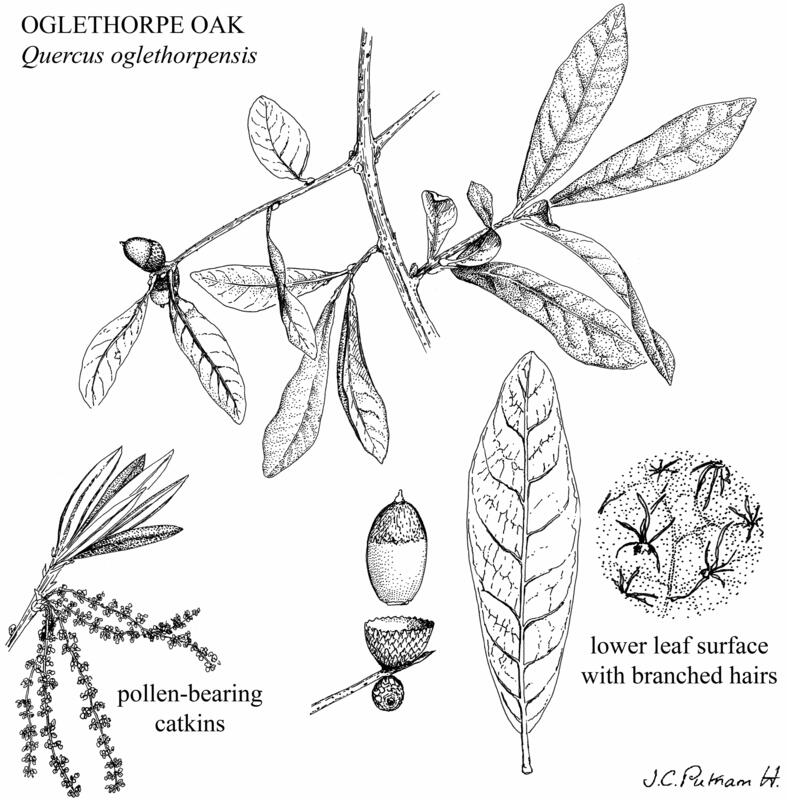
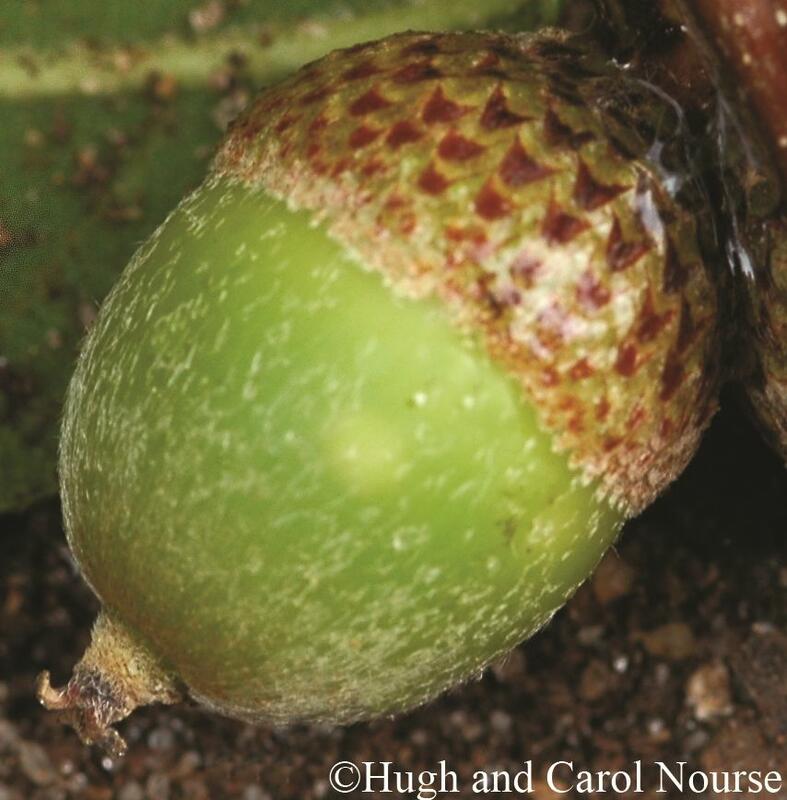
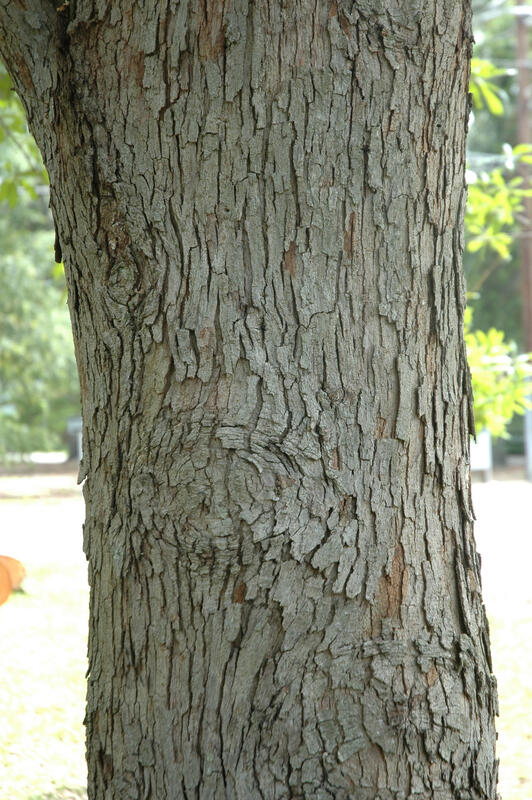
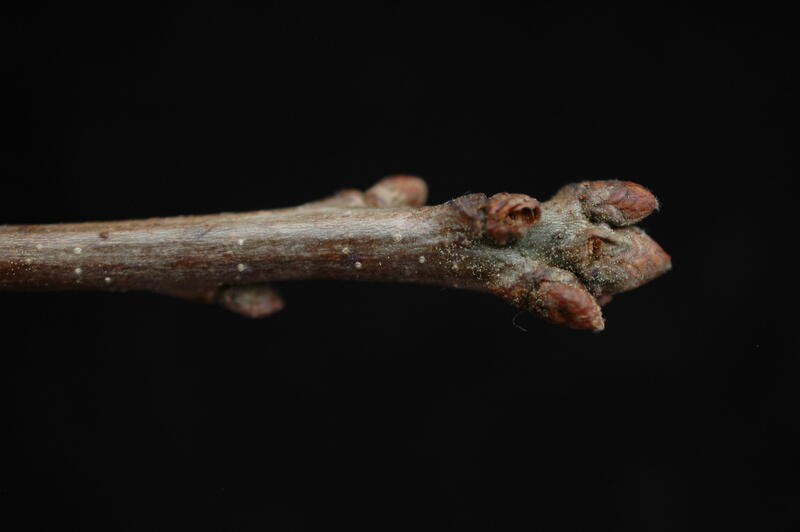
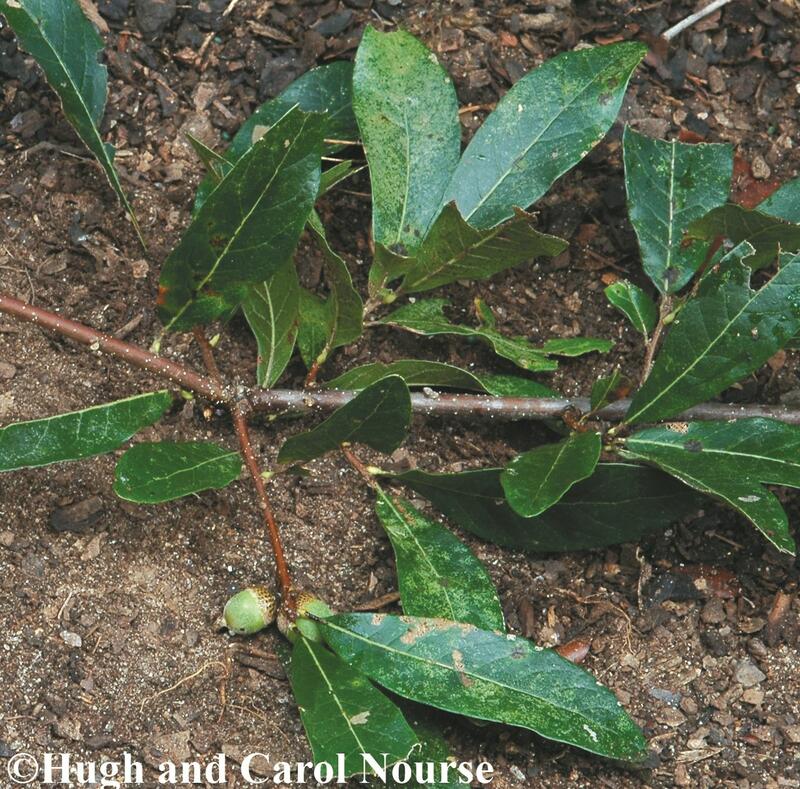
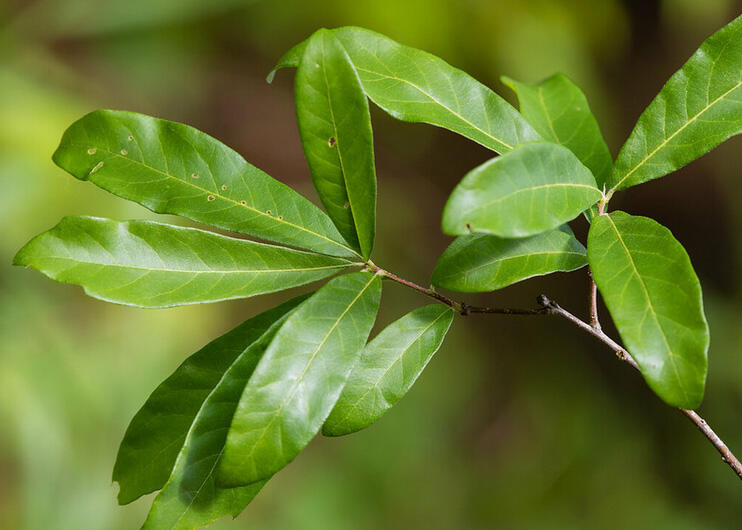
A tree up to 80 feet (25 m) tall with light gray bark in loose plates (similar to the bark of White Oak, Post Oak, and Overcup Oak), occasionally with scattered shoots along the trunk. Young twigs are reddish-brown and mostly hairless. The leaves are 2 - 5 inches (5 - 13 cm) long and 0.5 - 2 inches (1.5 - 5 cm) wide, oval, oblong, or lance-shaped; deciduous but usually marcescent (remaining on the tree through the winter); alternate; leathery; the margins are slightly wavy or with a few small lobes, but never toothed or bristle-tipped; the upper surface of mature leaves is dark green and hairless, the lower surface is yellowish-green and covered with velvety, yellowish hairs (with 10x magnification, hairs are seen to be stalked and branched). Acorns are about 0.5 inch (1 - 2 cm) long, oval, finely hairy, the cap covering ⅓ - ½ of the acorn; as with all white oaks, the acorns mature in one growing season.
Willow Oak (Quercus phellos) occurs in similar habitats but its leaves are narrow with pointed tips, and its bark is darker gray and furrowed rather than platy.
Water Oak (Quercus nigra) leaves are highly variable in shape and maybe resemble Oglethorpe Oak leaves but usually have a tooth or bristled lobe along the margin; Water Oak bark is relatively smooth and gray, becoming furrowed with age.
Nine species of oak (Quercus) are rare in Georgia. For more information, see: Rare plant list for Georgia
Wet clay soils of Piedmont seepage swamps, stream terraces, and moist hardwood forests upslope from these habitats; roadsides and pasture edges near and through these habitats. Often with Cherrybark Oak and/or Chalk Maple.
Oglethorpe Oak is in the “white oak” subgenus, and its acorns mature in one year (instead of two, as with “red oaks”). Oaks are wind-pollinated and must be cross-pollinated in order to produce fruit (acorns). The isolation of Oglethorpe Oak trees from one another caused by fragmentation of habitat can decrease pollination and acorn production.
Surveys are best conducted during late spring, summer, and fall when leaves are mature.
Georgia, Alabama, Mississippi, Louisiana, and South Carolina.
Conversion of habitat to pine plantations, pastures, and development. Stream impoundment and permanent or prolonged inundation of floodplains. Invasion by exotic pest plants, such as Japanese Honeysuckle, Autumn Olive, and Chinese Privet, that compete with seedlings. Deer browsing that kills seedlings and saplings.
| Threat 1 | Threat 2 | Threat 3 | |
|---|---|---|---|
| General Threat | Agriculture & aquaculture | Natural system modifications | Invasive & other problematic species, genes & diseases |
| Specific Threat | Wood & pulp plantations | Dams & water management/use | Invasive non-native/alien species/diseases |
Quercus oglethorpensis is ranked S2 by the Georgia Department of Natural Resources, indicating that it is imperiled in Georgia. It is also listed as Threatened by the State of Georgia. Nearly 50 populations have been documented in Georgia since its discovery in 1940, but several have been destroyed by impoundments and clearcutting. Five populations occur on National Forest and Army Corps of Engineers land, the rest on private land.
Preserve natural hydrology in streams and swamps. Protect populations from clearcutting. Eradicate exotic pest plants. Reduce the size of Georgia's deer herd.
Chafin, L.G. 2007. Field guide to the rare plants of Georgia. State Botanical Garden of Georgia and University of Georgia Press, Athens.
Duncan, W.H. 1940. A new species of oak from Georgia. American Midland Naturalist 24: 755-756. https://www.jstor.org/stable/2420872?origin=crossref&seq=1#metadata_info_tab_contents
Duncan, W.H. and M.B. Duncan. 1988. Trees of the southeastern United States. University of Georgia Press, Athens.
GADNR. 2020. Element occurrence records for Quercus oglethorpensis. Georgia Department of Natural Resources, Wildlife Resources Division, Social Circle, Georgia.
Haehnle, G.G. and S.M. Jones. 1985. Geographical distribution of Quercus oglethorpensis. Castanea 50(1): 25-31. https://www.jstor.org/stable/4033102?seq=1#metadata_info_tab_contents
Kirkman, L.K., C.L. Brown, and D.J. Leopold. 2007. Native trees of the southeast. Timber Press, Portland, Oregon.
Kral, R. 1983. A report on some rare, threatened, or endangered forest-related vascular plants of the South. Technical Publication R8-TP2. United States Forest Service, Atlanta.
NatureServe. 2019. Quercus oglethorpensis comprehensive report. NatureServe Explorer. Arlington, Virginia. http://explorer.natureserve.org/servlet/NatureServe?searchName=Quercus+oglethorpensis
Nixon, K. 1997. Quercus oglethorpensis species account. Flora of North America, vol. 3. http://beta.floranorthamerica.org/Quercus_oglethorpensis
Patrick, T.S., J.R. Allison, and G.A. Krakow. 1995. Protected plants of Georgia. Georgia Department of Natural Resources, Natural Heritage Program, Social Circle.
Stein, J., D. Binion, and R. Acciavatti. 2003. Field guide to native oak species of eastern North America. U.S. Forest Service, Morgantown, West Virginia.
Weakley, A.S. 2015. Flora of the southern and mid-Atlantic States. University of North Carolina Herbarium, University of North Carolina, Chapel Hill. http://www.herbarium.unc.edu/flora.htm
Linda G. Chafin
L. Chafin, Jul. 2008: original account
K. Owers, Feb. 2010: added pictures
L. Chafin, Mar. 2020: updated original account.
G. Krakow Mar. 2023: fixed borken link to Georgia rare plant list